Offering curbside service and drop-off appointments upon request.


Most pet owners have heard they should spay or neuter their pet. But knowing why, and knowing when, makes all the difference. Pet spay and neuter procedures are among the most impactful health decisions you can make for your dog or cat. They reduce the risk of serious disease, improve behavior, and support a longer, healthier life. Yet many pet owners still feel uncertain about the timing, the process, or what recovery actually looks like. This guide covers everything you need to know, from the real health benefits to the day of the procedure and the days that follow. Whether you have a new puppy, a kitten, or an older pet you’ve been putting off scheduling, you’ll find clear, practical answers here.
Why Spaying and Neutering Is One of the Best Health Decisions You Can Make
Spaying and neutering does far more than prevent unwanted litters. These procedures reduce or eliminate the risk of several serious, life-threatening conditions.
For female pets, spaying before the first heat cycle dramatically lowers the risk of mammary tumors. It also eliminates the risk of pyometra, a dangerous uterine infection that can become fatal if untreated. In our experience, pyometra is one of the most common reasons unspayed female dogs end up needing urgent care in middle age.
For male pets, neutering removes the risk of testicular cancer entirely. It also reduces the likelihood of prostate problems as your dog ages. The spay neuter benefits pets receive go well beyond reproduction.
Behavioral improvements are another major benefit. Neutered males are less likely to roam, mark territory indoors, or display aggression. Spayed females no longer go into heat, which eliminates the stress and behavioral changes that come with each cycle.
What Is the Best Age to Spay or Neuter a Pet?
For most dogs and cats, veterinarians recommend spaying or neutering between 4 and 6 months of age. This timing allows the procedure before the first heat cycle for females and before hormone-driven behaviors become established in males.
That said, the best age to neuter dog or spay a cat can vary based on breed, size, and individual health. Large and giant breed dogs may benefit from waiting until 12 to 18 months to allow full musculoskeletal development. Your veterinarian will recommend the right timing based on your specific pet.
Cats can be spayed or neutered as early as 8 weeks if they are a healthy weight, which is common in shelter settings. For most home-raised kittens, 4 to 5 months is the standard window.
One of the most common questions we get from pet owners is whether older pets can still be safely spayed or neutered. The answer is yes, in most cases. Age alone is not a disqualifier. A thorough pre-surgical health evaluation will determine if your pet is a good candidate.
What Happens During the Procedure
Spay and neuter procedures are performed under general anesthesia. Here is what to expect from start to finish:
- Pre-surgical exam: Your vet will review your pet’s health history and may run bloodwork to confirm they are safe for anesthesia.
- Anesthesia: Your pet is placed under general anesthesia and monitored throughout the procedure by a veterinary team.
- The surgery: A spay (ovariohysterectomy) removes the ovaries and uterus. A neuter (orchiectomy) removes the testicles. Both procedures typically take 20 to 90 minutes depending on the pet’s size and sex.
- Recovery monitoring: Your pet wakes up in a supervised recovery area. The team monitors breathing, heart rate, and pain levels before you are called to pick up your pet.
- Discharge instructions: You receive detailed aftercare instructions, including activity restrictions, incision care, and signs to watch for at home.
In Tempe, AZ, our vet team at Topaz Veterinary Clinic performs these procedures regularly and prioritizes pain management before, during, and after surgery to keep your pet as comfortable as possible.
What to Expect After Spaying or Neutering
The first 24 to 48 hours after surgery are the most important for your pet’s comfort and safety. Most pets are groggy when they arrive home and may not want to eat right away. That is completely normal.
Knowing what to expect after spaying or neutering helps you stay calm and respond quickly if something does not look right. Here is what recovery typically looks like:
- Days 1 to 2: Sleepiness, reduced appetite, and mild soreness are expected. Keep your pet in a quiet, confined space.
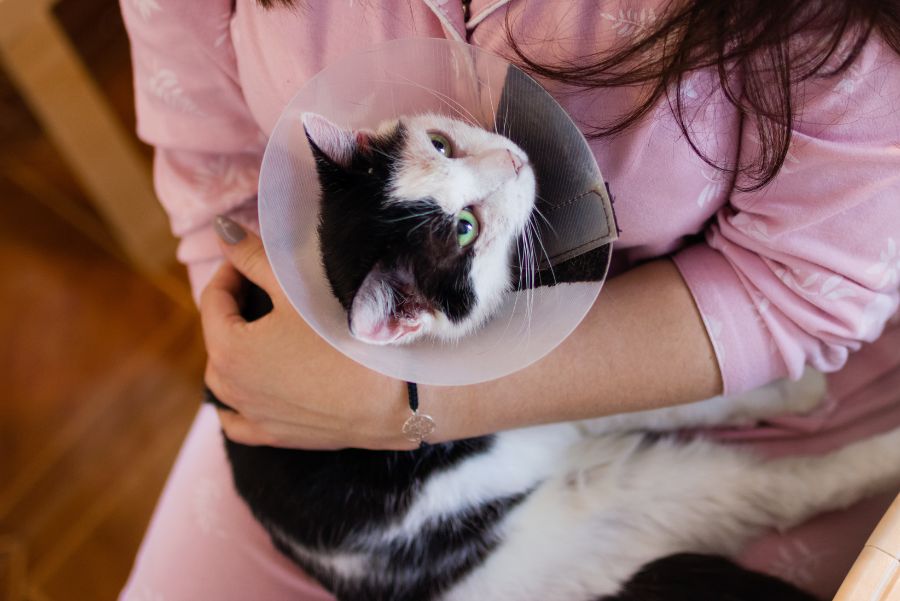
- Days 3 to 5: Energy often returns. This is the most common time pets try to lick or chew at the incision site. An e-collar (cone) prevents this.
- Days 7 to 14: Most pets heal fully within two weeks. A follow-up visit confirms the incision is healing properly.
Watch for these warning signs that require prompt veterinary attention: excessive swelling or discharge at the incision, persistent vomiting, refusal to eat past 24 hours, extreme lethargy, or difficulty urinating.
Pet Surgery Recovery Tips That Make a Real Difference
Helping your pet recover well does not require anything complicated. A few consistent habits go a long way.
Pet owners often tell us they underestimated how active their pet would want to be by day three or four. Restricting movement is the hardest part of recovery, but it protects the incision from reopening.
Follow these pet surgery recovery tips to keep the healing on track:
- Limit activity strictly for 10 to 14 days. No running, jumping, or rough play, even if your pet seems to feel fine.
- Check the incision daily. Look for redness, swelling, or discharge. A small amount of pinkness is normal. Oozing or separation is not.
- Keep the e-collar on at all times. Pets can cause serious damage to a healing incision in seconds without it.
- Follow the medication schedule. Pain medications and any prescribed antibiotics should be given exactly as directed.
- Offer small meals. Nausea from anesthesia can linger. Small, bland meals the first evening are easier on the stomach.
A common misconception we hear is that pets should be allowed to rest however they want after surgery. The truth is, unsupervised rest often means a pet finds something to chew on, including their stitches. Supervision matters most in the first week.
How to Choose the Right Clinic for Your Pet’s Procedure
Not all veterinary clinics offer the same level of veterinary surgical care. When evaluating where to have your pet spayed or neutered, look for a clinic that conducts pre-surgical bloodwork, uses modern anesthetic monitoring equipment, and provides clear discharge instructions with a follow-up plan.
Ask about the clinic’s pain management protocol. Pets that receive multimodal pain control before, during, and after surgery recover more comfortably and with fewer complications.
Topaz Veterinary Clinic follows rigorous surgical safety standards and takes time to walk every pet owner through the process before and after the procedure.
Conclusion
Spaying and neutering your pet is one of the most responsible and beneficial choices you can make for their long-term health. The spay/neuter benefits pets receive include reduced cancer risk, improved behavior, and a longer, more comfortable life. Timing matters, so a conversation with your veterinarian is the best first step. Recovery is manageable with the right preparation and a consistent routine at home. Pet spay and neuter procedures are safe, routine, and life-improving for the vast majority of dogs and cats. The team at Topaz Veterinary Clinic is here to guide you through every step, from the pre-surgical evaluation to the final follow-up visit. Book an appointment today.
Frequently Asked Questions
Q: What is the best age to spay or neuter a dog?
Ans: For most dogs, vets recommend spaying or neutering between 4 and 6 months of age. Large-breed dogs may benefit from waiting until 12 to 18 months. Your veterinarian will recommend the best timing based on your dog’s breed and health.
Q: Is spaying or neutering painful for pets?
Ans: Pets are under general anesthesia during the procedure and feel no pain. Veterinary teams administer pain medication before surgery and send pets home with appropriate pain control for the recovery period.
Q: How long does recovery take after spaying or neutering?
Ans: Most pets recover fully within 10 to 14 days. Activity should be restricted during this time to protect the incision. A follow-up exam confirms healing is complete.
Q: What are the health benefits of spaying a female dog or cat?
Ans: Spaying eliminates the risk of pyometra, a life-threatening uterine infection. It also significantly reduces the risk of mammary tumors, especially when performed before the first heat cycle.
Q: Can an older pet be safely spayed or neutered?
Ans: Yes, in most cases. Age alone does not disqualify a pet from surgery. Your veterinarian will conduct a pre-surgical health evaluation, including bloodwork, to confirm your pet is a safe candidate for anesthesia and the procedure.