Offering curbside service and drop-off appointments upon request.

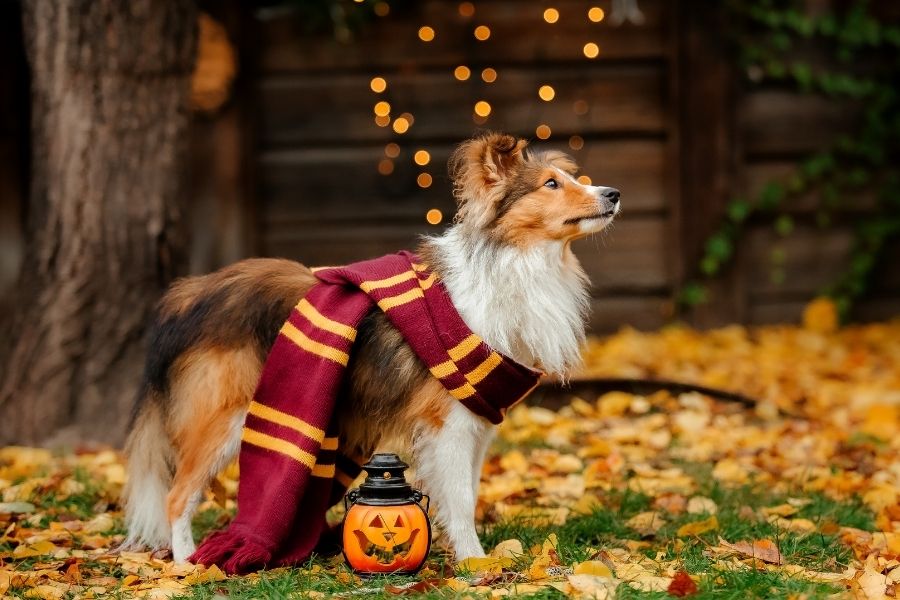
Halloween is consistently one of the highest-risk nights of the year for dogs to go missing. The combination of repeatedly opening front doors, distracted owners managing trick-or-treaters, and the startling sounds and sights of the evening creates more escape opportunities in a single night than most households encounter in months. The question of whether to microchip a dog before Halloween is not really a seasonal question; it is a year-round pet safety priority that Halloween makes urgently visible. Microchipping is the single most reliable tool for reuniting lost pets with their owners, and it takes less than five minutes to complete. This guide explains exactly what the procedure involves, why Halloween specifically raises the stakes, what to do if your dog does escape, and why every dog should be microchipped well before October 31st arrives.
Why Halloween Creates More Escape Opportunities Than Almost Any Other Night
The mechanics of Halloween night are uniquely dangerous for dogs. Understanding exactly why helps owners take targeted prevention steps rather than general ones.
Trick-or-treating means a household’s front door opens and closes dozens of times over the course of two to three hours. Each opening is an opportunity for a dog to slip out, and in a busy evening with children coming and going, the exit of a dog can go unnoticed for minutes to an hour. By the time the dog’s absence is discovered, they may have traveled several blocks.
The outdoor environment on Halloween amplifies the problem. Heavy foot traffic in costumes creates a street full of strangers that dogs may find frightening or exciting enough to run toward. Noise, unfamiliar smells from decorations and candy, and the general heightened energy of the evening can push a dog that would normally stay near the porch into a full flight response.
Dogs escape Halloween night risks are elevated in neighborhoods with high trick-or-treating traffic, but even quieter neighborhoods see an increase in open-door incidents simply because the pattern of the evening forces repeated door-opening over a compressed period of time. A dog that has never bolted before may do so on Halloween simply because the combination of factors is unlike anything they have encountered.
An estimated one in three pets will go missing at some point in their lifetime. Halloween concentrates that risk into a single night.
What a Microchip Is and How It Actually Works
A microchip is a small implantable device, roughly the size of a grain of rice, that is inserted under the skin between a dog’s shoulder blades using a needle. The process is quick, requires no anesthesia, and causes no more discomfort than a standard injection. The chip itself is not a GPS tracker. It does not have a battery, and it does not transmit location information in real time.
What it does is store a unique identification number that is linked to the owner’s contact information in a pet microchip registry. When a lost pet is brought to a shelter, animal control facility, or veterinary clinic, a handheld scanner is passed over the pet’s back. If a chip is present, the scanner reads the number, and that number is used to locate the owner’s information in the registry.
How pet microchips work in practice: a dog that escapes on Halloween night, is found by a neighbor, and is brought to an animal shelter the next morning can be identified and reunited with their owner within hours, often the same day, provided the chip is registered and the owner’s information is current. A dog without a chip relies entirely on a collar and tag that can fall off, be removed, or become unreadable.
Microchip dogs before Halloween not because the procedure has any seasonal component, but because October 31st is a high-probability escape event that a chip addresses directly and permanently.
What Vets Recommend Around Halloween and Microchipping
The veterinary community is consistent on this point: every dog should be microchipped, and Halloween is one of the most compelling reasons to act without delay if your dog is not yet chipped.
Dog microchipping benefits pet safety in a way no collar or fence can fully replicate. Collars break, slip off, or are removed. Fences can be jumped, dug under, or left with a gate accidentally open. A microchip, once implanted, stays in place for the lifetime of the pet and requires no maintenance.
Vets also recommend registering the chip and keeping the registry information current. The chip is only as useful as the information attached to it. If you move, change your phone number, or update your email, the registry record must be updated. A chip linked to an old address or disconnected phone number cannot help a shelter reunite you with your dog. The implant procedure and the registry update are equally important steps.
For dogs who are already microchipped, Halloween is a good reminder to verify your registration. Look up your chip number, confirm your contact information is current, and ensure the chip is registered in a universal database rather than only a closed proprietary registry.
What to Do If Your Dog Escapes on Halloween Night
Even with the best precautions, dogs escape Halloween night situations do happen. Knowing what to do immediately after a dog goes missing maximizes the chance of a fast recovery.
- Start searching immediately. Do not wait until morning. Walk the immediate neighborhood, calling your dog’s name. Dogs that bolt often circle back toward familiar smells within a few blocks.
- Alert neighbors right away. Knock on nearby doors and ask people who are already outside during trick-or-treating to watch for your dog. A neighborhood that is already populated with people is actually an asset in this situation.
- Post on community social media platforms the same night. Local neighborhood groups and lost pet pages often produce rapid sightings. Include a clear, recent photo.
- Contact local shelters and animal control before they open in the morning. File a lost pet report with your dog’s description, microchip number if applicable, and contact information.
- Visit shelters in person. A description provided by phone is less effective than showing up with a photo. Animals are not always checked in under descriptions that match how owners would describe them.
- Check the area around your home repeatedly. Lost dogs often return to familiar territory after the initial panic subsides. Leave a piece of your worn clothing near your door as a scent anchor.
What to do if a dog runs away during Halloween begins before the night does, by setting up the environment to reduce escape likelihood in the first place.
How to Reduce Halloween Escape Risk in Your Home
Prevention is far easier than recovery. Several practical steps reduce the probability of escape significantly.
Secure your dog in a back room or a crate before trick-or-treating hours begin, not after the first close call. This eliminates the repeated door-opening exposure entirely. A dog that cannot access the front entrance cannot bolt through it.
What to do if a dog runs away on Halloween? At its most effective, it means it never gets to that step. Ensure your fence is fully checked for gaps, weak spots, and height that your dog can clear. On Halloween, consider running the fence check the day before rather than assuming it is fine.
Make sure your dog is wearing a properly fitted collar with current tags, even if they are also microchipped. Tags provide an immediate visual identification that does not require a scanner. The microchip serves as the backup when tags fail, not the primary system.
In Tempe, AZ, Halloween sees high outdoor participation even in the warmer evening temperatures. Neighborhoods with dense trick-or-treating traffic have elevated front-door activity that makes securing dogs indoors during peak hours especially important.
The vet team at Topaz Veterinary Clinic sees a predictable increase in lost pet cases connected to Halloween every year. Quality veterinary care includes the kind of proactive guidance that keeps pets safe on the highest-risk nights of the calendar, and the decision to microchip dog before Halloween is one of the simplest and most impactful steps any dog owner can take. Book an appointment today.
Frequently Asked Questions
Q: Does microchipping a dog hurt?
Ans: The procedure involves a needle slightly larger than one used for standard vaccinations, and most dogs show minimal reaction. It is comparable to a routine injection in terms of discomfort. No anesthesia is required, and the entire process takes less than a minute. Any brief discomfort is far outweighed by the lifetime protection the chip provides.
Q: How old does a dog need to be to get microchipped?
Ans: Most veterinarians recommend microchipping as early as six to eight weeks of age, often at the same time as first vaccinations. There is no maximum age requirement. Adult and senior dogs are microchipped routinely without issue.
Q: If my dog has a microchip, do they still need to wear a collar and tags?
Ans: Yes. A microchip requires a scanner to read, which means it is only useful once a pet is brought to a facility with one. A collar and tag provide immediate visible identification that anyone who finds your dog can read without equipment. Both are recommended as complementary layers of identification.
Q: What registry should I use for my dog’s microchip?
Ans: Register with a universal registry that is searchable by shelters and veterinary clinics across the country. Ask your veterinarian which registry they recommend and confirm that your chip number is searchable from multiple databases. Some chips are registered only in closed registries that not all shelters can access.
Q: My dog is already microchipped. What should I do before Halloween?
Ans: Look up your chip number and verify that your current contact information is on file in the registry. If you have moved, changed your phone number, or updated your email since the chip was implanted, update the registry immediately. An unregistered or outdated chip provides very limited benefit.

