Offering curbside service and drop-off appointments upon request.


Every year, millions of pets go missing. Collars slip off. Tags fade. Fences fail on the hottest afternoons and the busiest holidays. What reunites a lost pet with their family more reliably than anything else is something you cannot see, and your pet cannot lose: a microchip. A pet microchipping service gives your dog or cat a permanent form of identification that travels with them for life. It takes seconds to place, causes minimal discomfort, and can be the single most important step you take to protect your pet. If you have been wondering whether microchipping is worth it, the short answer is yes. This article explains exactly how it works, what the process involves, and why it is one of the most recommended steps in responsible pet ownership.
What Is a Pet Microchip and How Does It Work?
A pet microchip is a tiny electronic device, roughly the size of a grain of rice. It is implanted just beneath the skin, typically between the shoulder blades. Each chip carries a unique identification number linked to your contact information in a national pet registry database.
The chip itself does not have a battery or GPS. It is a passive RFID device that activates only when scanned. A handheld scanner emits a radio frequency that powers the chip just long enough to transmit the ID number.
Shelters, animal control facilities, and veterinary clinics all use compatible scanners. When a lost pet is brought in, staff scan for a microchip first. The number is then used to look up the registered owner and make contact.
This system works because of a straightforward chain: chip, registry, reunion. Microchips do not expire and do not require charging. Once placed, they are designed to last the lifetime of your pet.
Signs Your Pet May Not Be Fully Protected
Many pet owners believe their pet is protected because they wear a collar with tags. Tags are helpful, but they have real limitations. Here are the most common gaps in pet ID coverage:
- Collar comes off: Pets can wriggle free, snag tags on fences, or slip collars during a startle response. A lost collar means lost identification.
- Tags become unreadable: Engraving fades with time and wear. A tag that was legible two years ago may now be scratched beyond recognition.
- No secondary ID backup: If the collar is gone and no chip is present, there is no way for a shelter or vet to trace the animal back to you.
- Registration is missing or outdated: Some pets have chips but outdated registry information. An old phone number or address makes the chip nearly useless.
- Indoor cats without ID: Pet owners often tell us their indoor cat does not need a microchip. In our experience, indoor cats are among the most commonly lost pets because an open door or window is all it takes.
A microchip addresses all of these gaps. It is a backup that cannot fall off or wear out.
What to Expect at Your Microchipping Appointment
The microchipping process is fast and straightforward. Most appointments are completed in under 15 minutes. Here is what typically happens:
- Check-in and brief health review. Your vet may ask a few questions and do a quick assessment to confirm your pet is in good health.
- Chip placement. Using a sterile needle, the microchip is injected beneath the skin between the shoulder blades. Most pets react no more than they would to a routine vaccine.
- Scanner confirmation. The vet immediately scans the site to confirm the chip is reading correctly and transmitting the right ID number.
- Registry enrollment. You will receive your pet’s unique chip number. This is when you register that number in a pet recovery database with your current contact information.
- Documentation. Keep a copy of your chip number and registry confirmation somewhere easy to find.
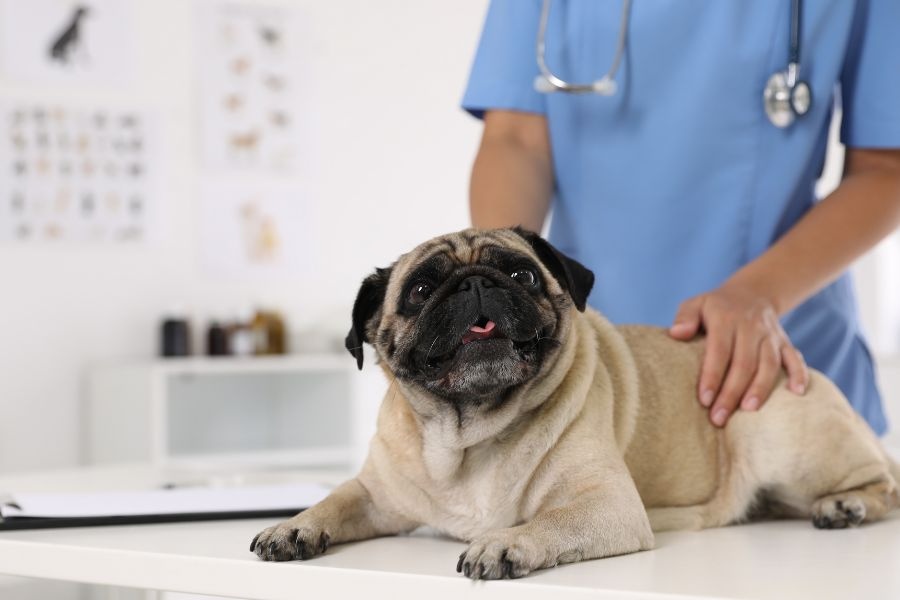
At Topaz Veterinary Clinic, the microchipping appointment is designed to be calm and low-stress for your pet in Tempe. The process causes minimal discomfort, and most dogs and cats are back to their normal selves within minutes.
How Does Pet ID Chip Registration Actually Work?
Pet ID chip benefits are only fully realized when registration is complete. This is a step many pet owners miss.
The chip itself stores only a number. That number must be linked to your contact details in a searchable database. There is no universal registry in the United States, but most shelters and veterinary clinics use lookup tools that search multiple databases at once.
After your pet is chipped, you register pet microchip online through a database such as Found Animals, PetLink, or the AKC Reunite registry. The registration process takes just a few minutes. You create an account, enter your chip number, and provide your name, phone number, address, and any alternate contact.
The most important rule: keep that information current. A microchip with an old phone number is far less effective. Every time you move or change your number, update your pet’s registry profile. This one habit dramatically improves the chance of a successful reunion if your pet ever goes missing.
In Arizona, we see a notable number of pets that become lost during monsoon season. Storms, thunder, and sudden weather changes can cause even calm pets to bolt. Having your pet’s microchip registered and up to date before monsoon season arrives in the Tempe area is a simple step that provides real peace of mind.
Lost Pet Recovery Tips That Start Before Your Pet Goes Missing
The best lost pet recovery tips are the ones you act on now, not after your pet disappears.
Statistics suggest that pets with microchips are returned to their owners at significantly higher rates than those without. Dogs with chips are reunited at more than twice the rate of unchipped dogs. For cats, the difference is even more striking.
Here is what proactive pet owners do to maximize their pet’s chances:
- Microchip every pet in the household, including cats, small dogs, and rabbits.
- Register the chip immediately after the implant appointment.
- Set a calendar reminder each year to verify your registry information is current.
- Take a recent photo of your pet showing any distinctive markings. Store it on your phone.
- Know your chip number. Keep it in your wallet or saved in your phone contacts.
We frequently remind our clients that a microchip without up-to-date registration is like a lock without a key. Both parts have to be in place for the system to work. The microchip implant for pets is the easy part. Staying current in the registry is the ongoing responsibility that makes it powerful.
Conclusion
Microchipping is one of the simplest and most lasting investments you can make in your pet’s safety. It protects against the unexpected. It works even when collars, tags, and fences do not. A pet microchipping service takes minutes but offers a lifetime of protection. If your pet is not yet microchipped, or if you are not sure whether your pet’s registration information is current, today is the right time to take action. At Topaz Veterinary Clinic, our team is ready to help you get your pet protected quickly and comfortably. Book an appointment today.
Frequently Asked Questions
Q: Does microchipping a pet hurt?
Ans: Most pets experience minimal discomfort during microchipping. The needle used is slightly larger than a standard vaccine needle, but the procedure is very brief. Most dogs and cats show little to no reaction.
Q: How do I find out if my pet already has a microchip?
Ans: Your veterinarian can scan your pet for a microchip during any routine visit using a handheld scanner. Shelters and animal control facilities can also scan for chips at no charge.
Q: What happens if I move or change my phone number after microchipping my pet?
Ans: You need to update your pet’s information directly in the registry where the chip is enrolled. Log in to your registry account and update your contact details. Keeping this current is essential for the chip to work effectively.
Q: Can a microchip track my pet’s location in real time?
Ans: No. A standard pet microchip is not a GPS device and cannot track location. It only transmits an ID number when scanned by a compatible reader. GPS pet trackers are separate devices that attach to a collar.
Q: At what age can a pet be microchipped?
Ans: Most veterinarians recommend microchipping as early as 8 weeks of age, and it is often done at the same time as a puppy or kitten’s first vaccine visit. Your vet can advise on the best timing for your specific pet.