Offering curbside service and drop-off appointments upon request.


Most pets hide pain well, and that makes pet dental disease one of the easiest health problems to miss. Dogs and cats keep eating, playing, and acting normal even as infection builds under the gum line. By the time an owner notices bad breath or drooling, the disease has often progressed for months or years. This article explains what to watch for, why it happens, and how to protect your pet’s teeth before serious damage sets in. Understanding the early warning signs can save your pet from pain, tooth loss, and costly complications down the road. The good news is that with regular care, most dental disease is preventable.
What Is Dental Disease and Why It Matters
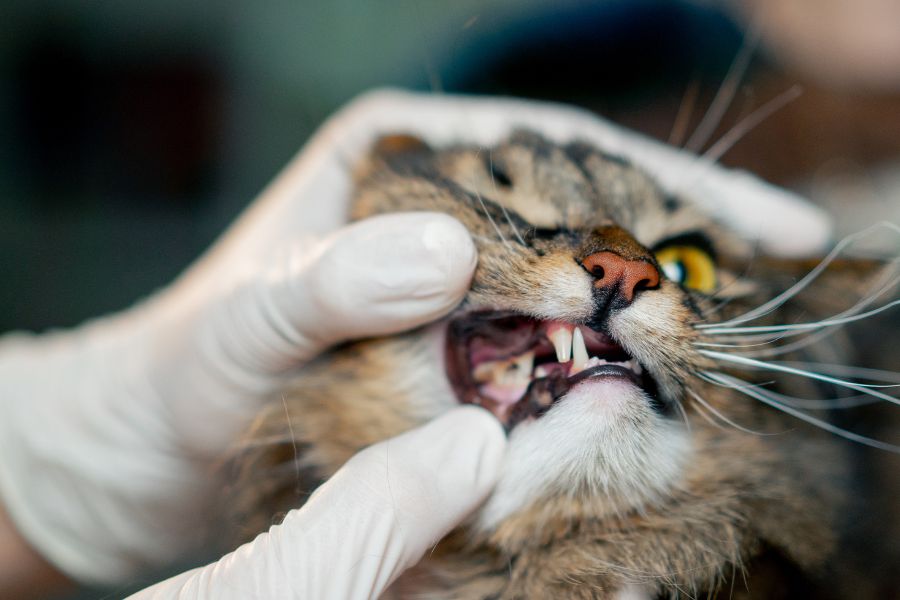
Dental disease begins when plaque hardens into tartar along the gumline, allowing bacteria to spread beneath the surface. Left untreated, this bacteria damages the gums, ligaments, and bone supporting each tooth. Dental disease affects an estimated 80 percent of dogs and cats over the age of three, making it one of the most common conditions veterinarians treat.
The infection does not stay contained to the mouth. Bacteria can enter the bloodstream and place added stress on the heart, kidneys, and liver over time. A dog dental cleaning vet visit early in life helps prevent this chain reaction before it starts.
Signs Your Pet Needs Dental Care
Pets rarely show obvious pain, so subtle changes matter. Watch for these signs of dog tooth decay and gum disease in both dogs and cats.
- Persistent bad breath that does not improve with chew toys or treats
- Yellow or brown buildup along the gumline
- Red, swollen, or bleeding gums
- Dropping food, chewing on one side, or reduced interest in hard kibble
- Pawing at the mouth or visible drooling
In our experience, cat bad breath causes are often dismissed as normal, when in reality odor is almost always a sign of active infection. If you notice any of these signs, a dental exam should be scheduled promptly rather than delayed.
What to Expect at Topaz Veterinary Clinic
A dental visit follows a clear, predictable process designed to keep your pet safe and comfortable.
- A physical exam checks overall health before any anesthesia is used.
- Bloodwork confirms your pet can safely undergo the procedure.
- Full anesthesia allows a thorough cleaning below the gumline, where disease actually lives.
- Dental X-rays reveal problems hidden beneath the surface that a visual exam alone would miss.
- Any diseased teeth are addressed, and the remaining teeth are polished smooth.
Pet owners often tell us they were nervous about anesthesia, but modern monitoring makes these procedures very safe for the vast majority of healthy pets.
Why Arizona Pets Face Added Dental Risk
Dry desert air common throughout Arizona can reduce natural saliva production, which normally helps rinse away bacteria in the mouth. With less saliva doing that job, plaque can build up faster than in more humid climates. Many pet owners assume dental disease is only a cosmetic issue affecting breath and tooth color. In reality, it is a source of chronic pain and infection that pets simply cannot express in ways people easily recognize.
Small and toy breed dogs face even higher risk because their teeth are often crowded closer together. This crowding traps more debris and makes at-home cleaning more difficult without guidance.
What Are the Signs of Dental Disease in Pets?
The clearest signs of dental disease are persistent bad breath, visible tartar buildup, red or bleeding gums, and reluctance to chew. Any one of these signs on its own is worth a veterinary exam. Together, they usually indicate the disease has already progressed beneath the gumline.
How to Choose the Right Vet for Pet Dental Care
Look for a clinic that uses dental X-rays as a standard part of every cleaning, not an optional add-on. Ask whether anesthesia monitoring includes blood pressure and oxygen tracking throughout the procedure. A good team will also walk you through at-home pet dental care tips so progress continues between visits. The team at Topaz Veterinary Clinic prioritizes X-rays and monitoring on every dental procedure performed.
Pet dental disease rarely announces itself loudly, which is exactly why routine exams matter so much. Watching for bad breath, tartar, and gum changes gives owners a real chance to catch problems early. Regular cleanings, combined with consistent home care, protect not just the mouth but the heart and organs connected to it. Topaz Veterinary Clinic recommends scheduling a dental exam at the first sign of trouble rather than waiting for symptoms to worsen. Book an appointment today.
Frequently Asked Questions
Q: How do I know if my dog has dental disease?
Ans: Look for persistent bad breath, yellow or brown tartar along the gumline, red or bleeding gums, and reluctance to chew hard food. Any of these signs warrants a veterinary exam.
Q: Is bad breath in cats always a sign of a problem?
Ans: Yes, in almost all cases, persistent bad breath signals bacterial buildup or infection rather than something normal. It should never be ignored as simply “cat breath.”
Q: Can dental disease affect other organs?
Ans: Yes, bacteria from infected gums can enter the bloodstream and place stress on the heart, kidneys, and liver over time. This is one reason early treatment matters beyond just the mouth.
Q: How often should pets have a dental exam?
Ans: Most healthy adult pets benefit from a dental exam at least once a year, though your vet may recommend more frequent checks based on breed and history. Small-breed dogs often need closer monitoring due to teeth crowding.
Q: What can I do at home to prevent dental disease?
Ans: Daily brushing, dental-specific chews, and water additives approved by your vet can all help slow plaque buildup between visits. These steps work best when paired with regular professional cleanings.